
The Knights of Blaník Come to Prague
Understanding One of Prague's Newest November 17 Traditions
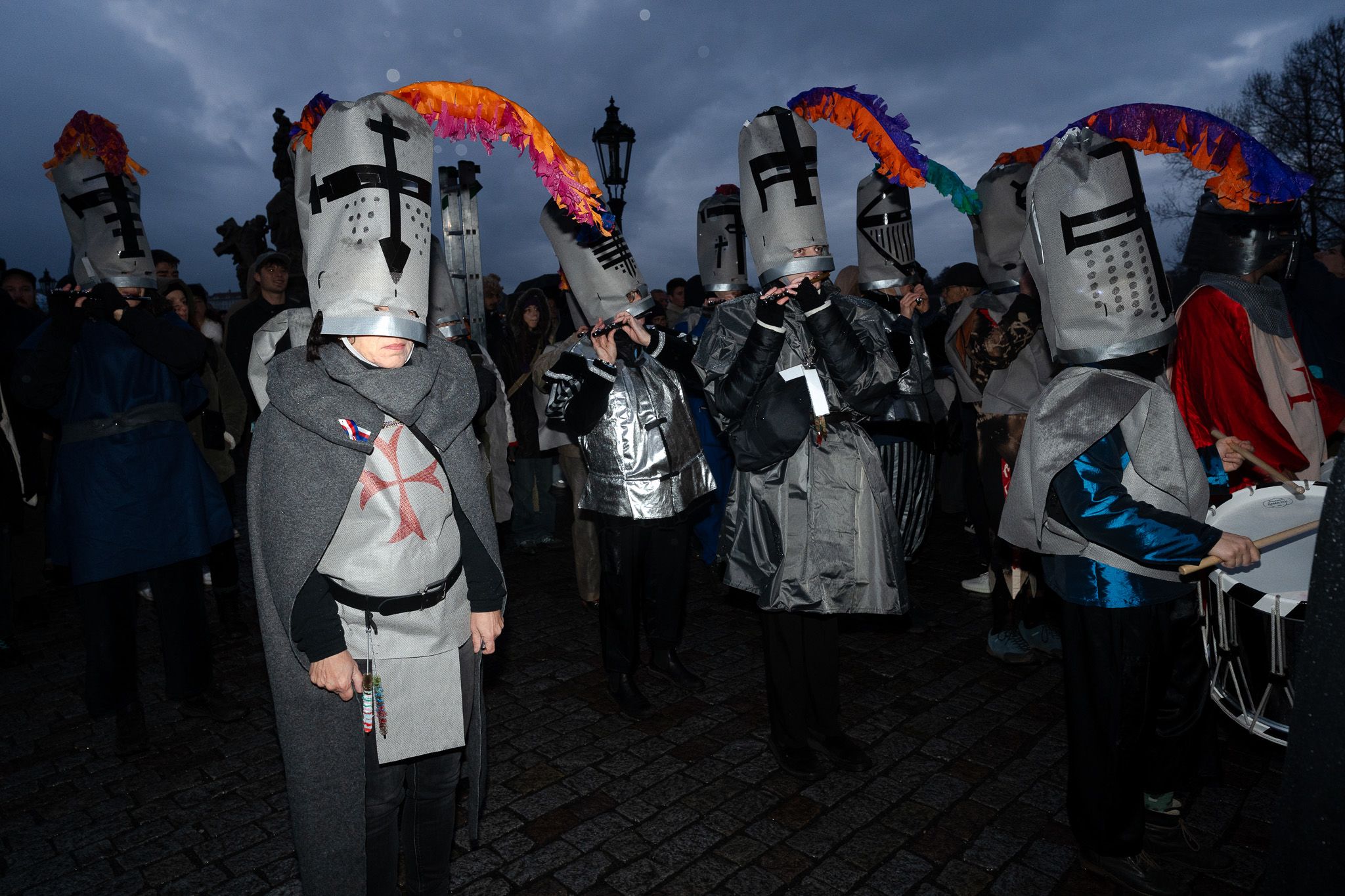

Every year on November 17, Prague is filled with memories of the Velvet Revolution – candles, crowds, speeches, and the weight of history along Národní třída. But over the past decade, a different ritual has taken shape: the Velvet Carnival, a young and imaginative tradition that reshapes the day through music, satire, and collective creativity.
Unlike the political marches, the Velvet Carnival doesn’t reenact the past. It reinterprets it. And at the center of this year’s reinterpretation stood one of the Czech Republic’s most iconic groups: the Knights of Blaník, a modern take on a Czech legend about sleeping warriors who awaken in times of crisis. This year, the Knights took center stage at the Velvet Carnival, reminding the city that democracy is also kept alive through play, imagination, and public expression.
The History of the Velvet Carnival and its Preparations

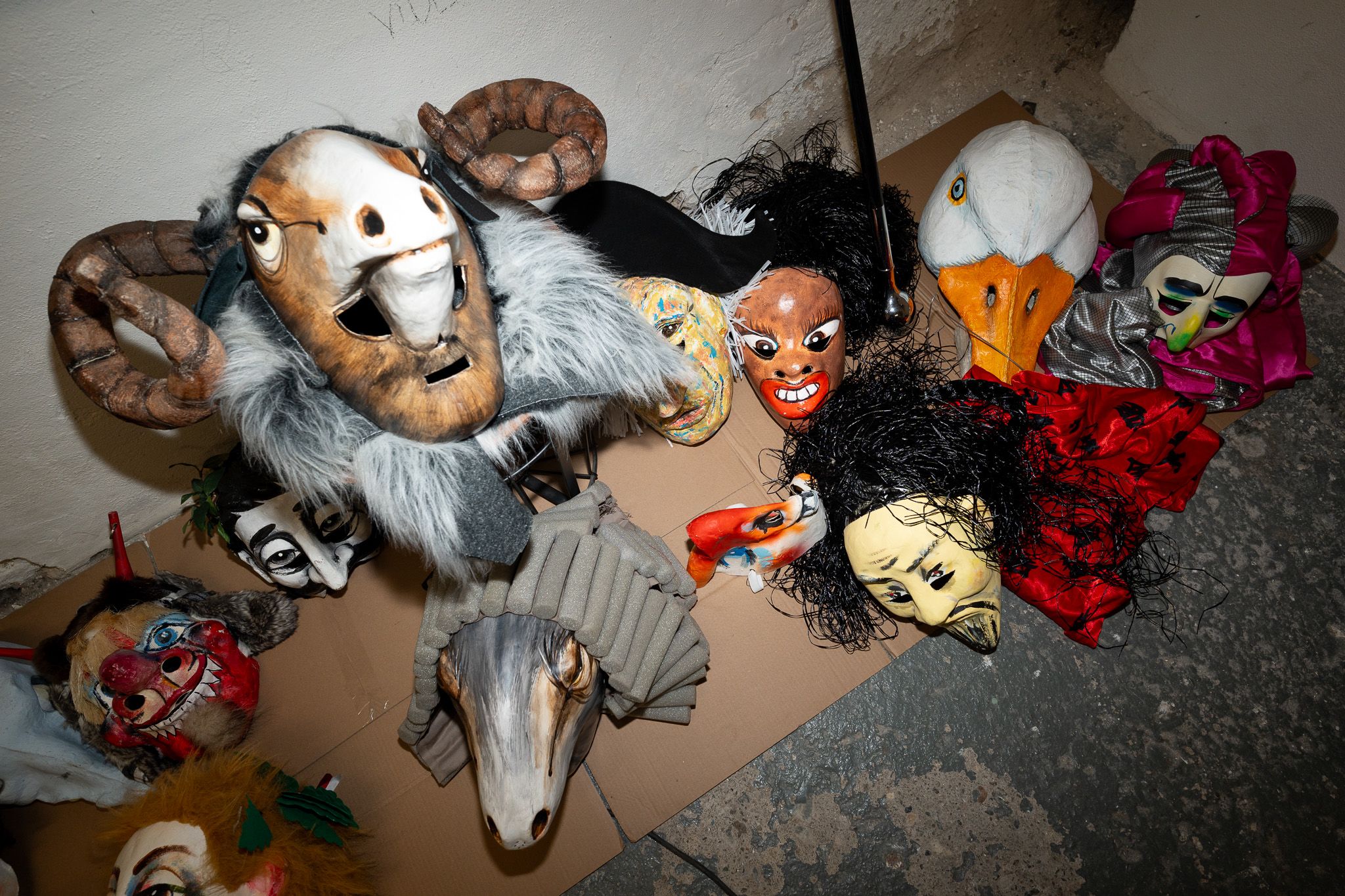
The Velvet Carnival is young. It began in 2012, created by artists and activists who wanted to mark November 17 in a way that was participatory, creative, and accessible to everyone. Instead of another political march, they imagined a moving piece of street theater—where costumes carry messages, humor becomes critique, and each group tells its own story.
At the center of the parade is hyperbole and satire, two entertaining tools used to bring the year’s most salient issues to the forefront of the public discourse during the November 17 celebrations. This year, the symbolic framework of the event was the legend of the Knights of Blanik – “Blaníčtí rytíři” in Czech – a mythical group in Czech folklore that supposedly lies silently in wait to come to the aid of the Czech people at the moment of their greatest need. Adorned in suits of cardboard armor and colorful plumes, the Knights of this year’s parade evoked Blaníčtí rytíři’s historical symbolism to present the need for public action in a time of far-right populism and eroding democratic norms.
Kateřina Ratajová, president and project coordinator of the Velvet Carnival, speaks on the selection of this year's theme.
Kateřina Ratajová, president and project coordinator of the Velvet Carnival, speaks on the selection of this year's theme.
Another group represented the demands of Czech parents to accompany their children through medical treatment at hospitals, a right that was recently passed into law but remains difficult to fulfill in practice in hospitals not equipped to host young patients’ family members. The centerpiece of this group was a life-size crib made to look like the body of a woman, representing the idea that being near their parents is an important part of every child’s medical treatment.
According to Kateřina Ratajová, the Velvet Carnival’s president and project coordinator, preparations for the carnival begin months in advance. “So we start in the spring and usually the first idea is pitched in June, and then we start doing the proper work with all the planning and themes and subjects in September,” said Ratajová.

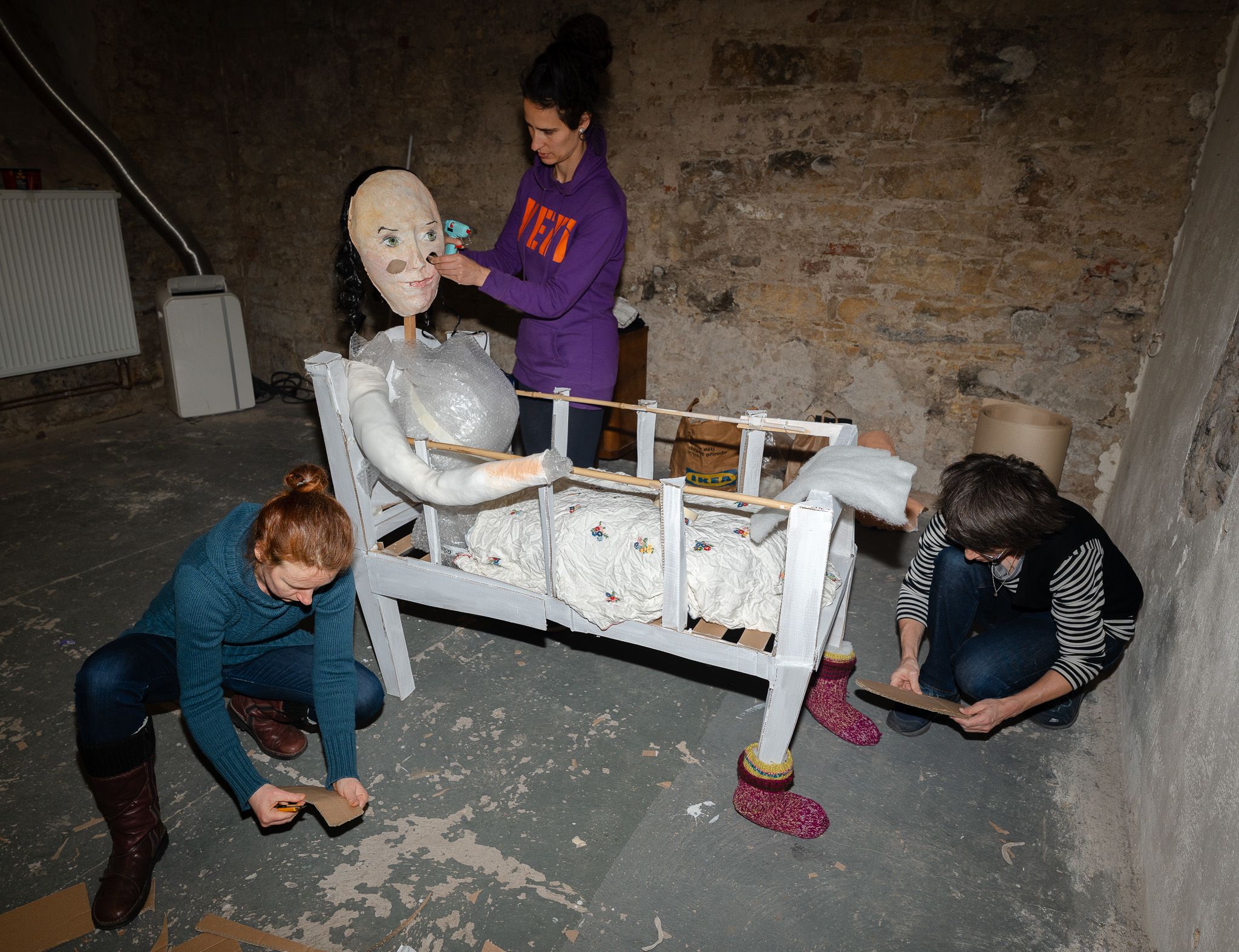
Johanna Bratinka, Josefina Jonasova, and Lukinka from the "Do Not Enter – Love" group construct the group's biggest piece.
Johanna Bratinka, Josefina Jonasova, and Lukinka from the "Do Not Enter – Love" group construct the group's biggest piece.
The scale of the work behind the event was clearest in the workshop at Hybernská 4 on the day before the parade. That afternoon, the Knights of Blaník and other participants gathered in a basement full of cardboard helmets, fabric, wooden props, instruments, and half-finished puppets. The room felt chaotic and focused at the same time. A drumbeat echoed while someone adjusted a hand-painted shield; another group rehearsed a melody that would later guide the parade through the streets.

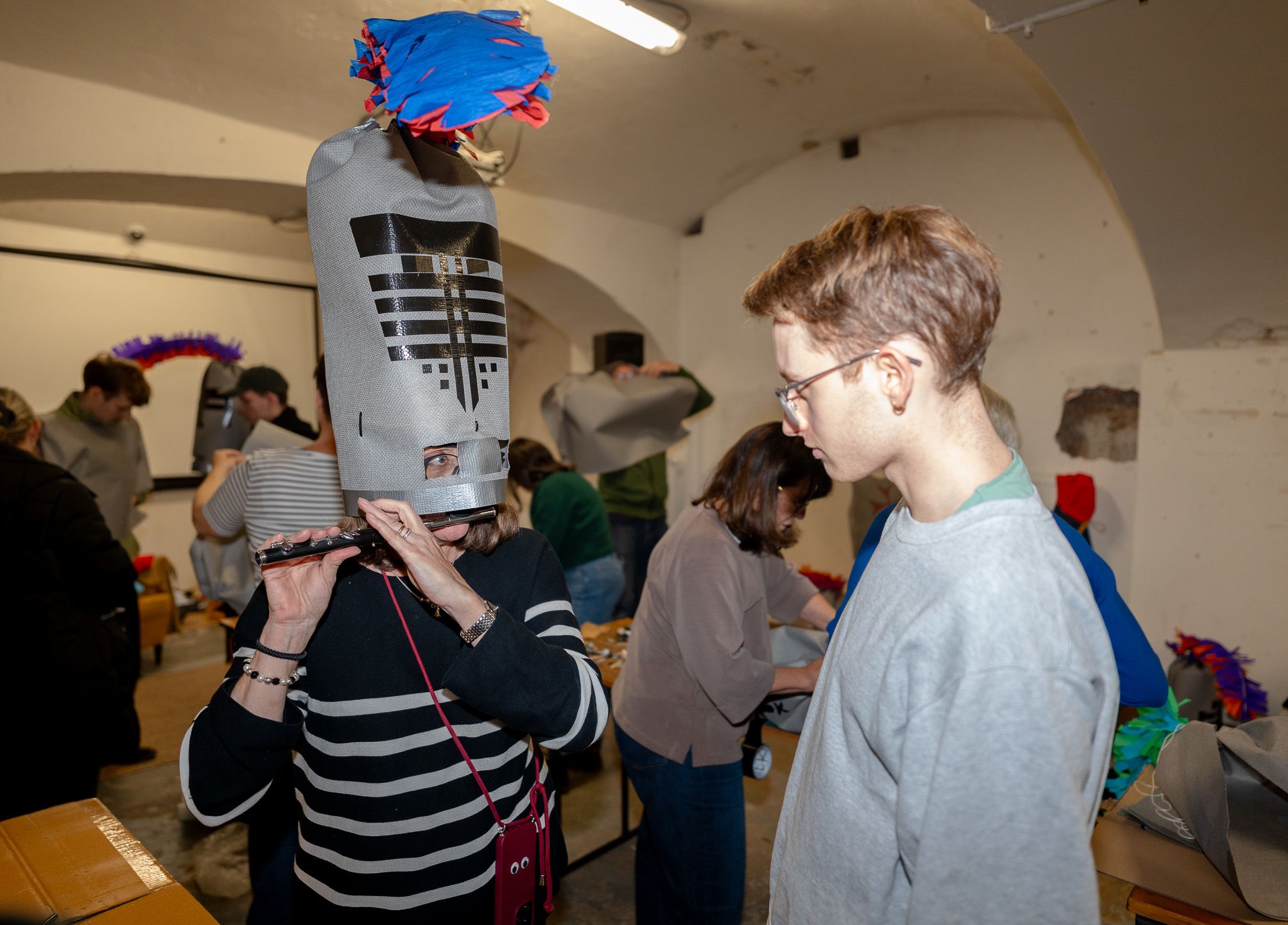
When constructing their costumes, marchers need to make sure they can still play their instruments.
When constructing their costumes, marchers need to make sure they can still play their instruments.
In the dusty basement, the concept behind the Velvet Carnival could be seen and heard in the interactions between marchers and the vibrant atmosphere. This wasn’t just a time to prepare costumes. It was a time to prepare and share ideas with like-minded individuals, who were passionate about democratic representation and satirical performance.
International Collaboration

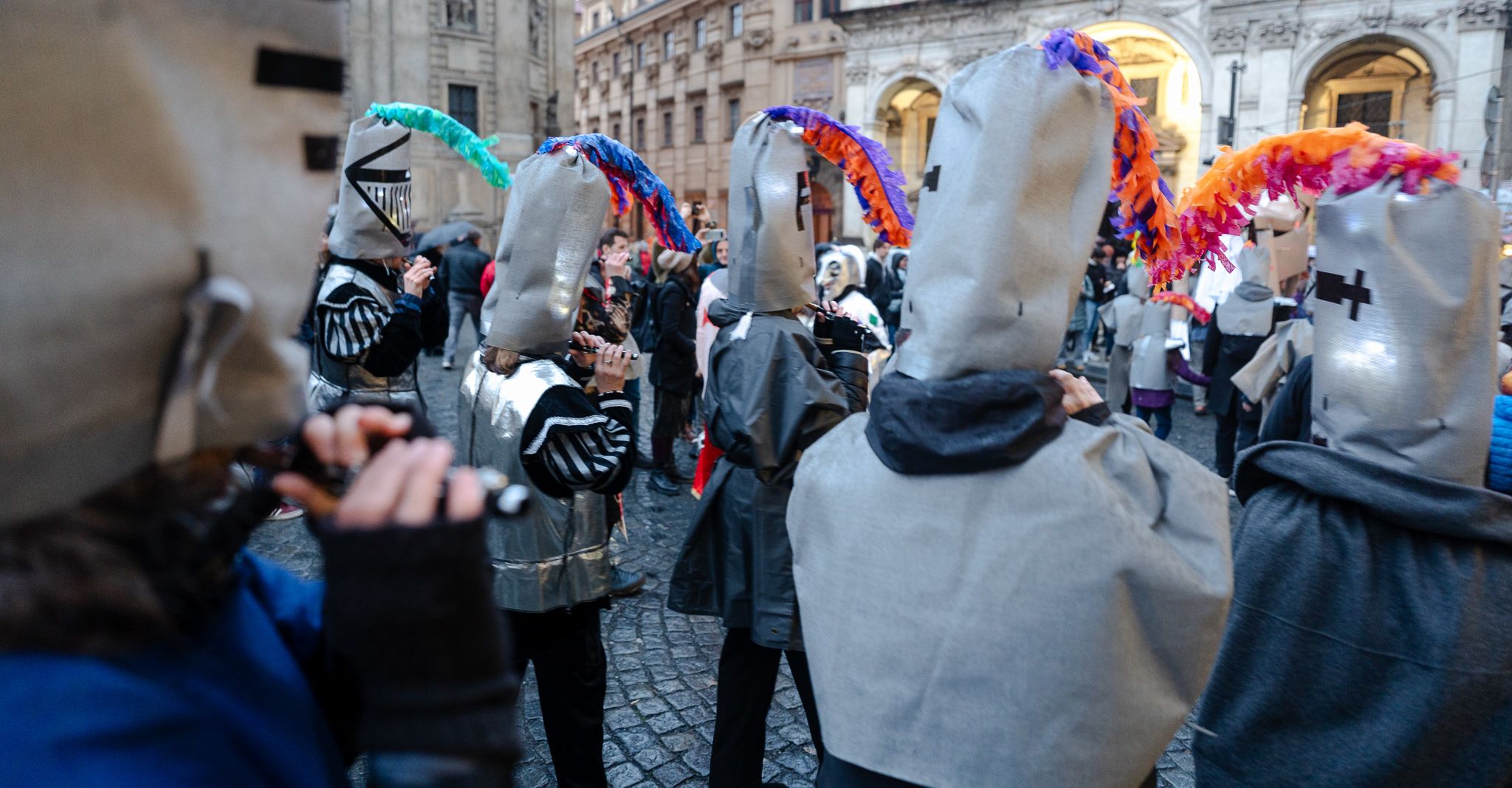
One of the carnival’s strongest qualities is its international network. Groups from Belgium, Switzerland, and the Netherlands join every year, bringing their own traditions of satirical street performance, from Brussels’ Zinneke Parade to the Dutch St. Maarten's festival. The Velvet Carnival itself was inspired by Basel’s Fastnacht – a Carnival tradition dating back centuries based on the use of satire to promote civic engagement and community. Now, marchers from Basel and other urban parades around Europe come to Prague every year to participate in the Velvet Carnival.
An interview with a participant from Basel, in which he explains the significance of the Velvet Carnival.
An interview with a participant from Basel, in which he explains the significance of the Velvet Carnival.
Paul Feld, artistic director of the Dutch Sharing Arts Society, which organizes its own parade in Utrecht every year, explained that despite the cultural and historical differences between each parade, there exists a sort of international kinship in the playful celebration of democracy. “In a way, the Velvet Revolution and the celebration around it reminds me of our own liberation day,” said Felt. “What’s very interesting in the exchange with all of the other parades in Europe is that every parade says something about the soul of the city. [...] I think Velvet Carnival is really a big moment in the history of the Czech Republic”
Thus, despite being a new event for Czechs, the Velvet Carnival is in reality an extension of longstanding traditions across Europe combining patriotic celebration with civic engagement and performance.

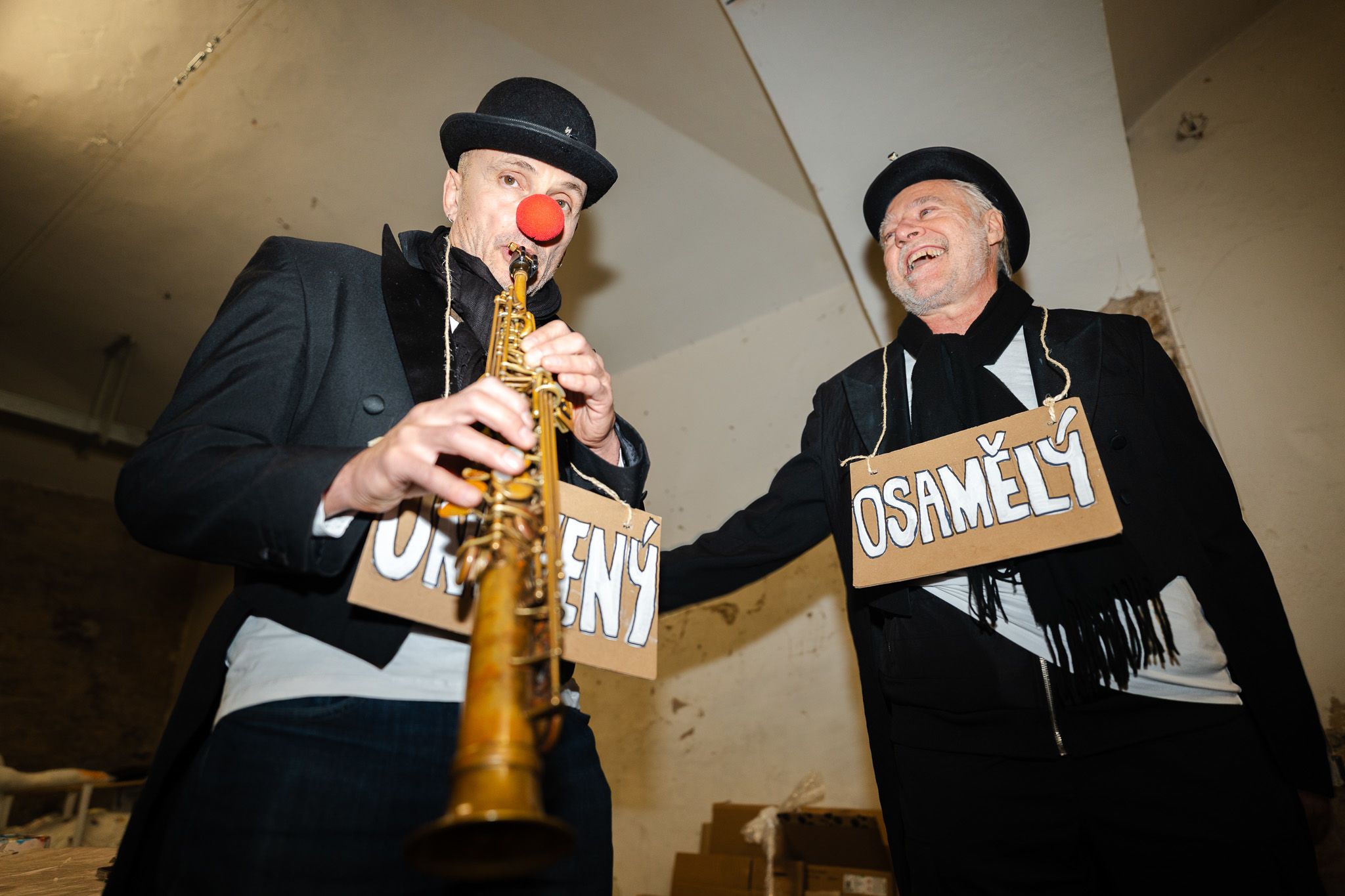
Paul Felt with a fellow clown from Saint Maarten's Parade in Utrecht.
Paul Felt with a fellow clown from Saint Maarten's Parade in Utrecht.
Undergirding the event, its history, and its international connection is education. The November 17 holiday is itself grounded in the brutal attack on students protesting Nazi occupation in 1939 and the subsequent student demonstrations protesting Communist rule 50 years later, which helped bring about the Velvet Revolution.
Today, students and professors continue to be central to the observance of the holiday – particularly with regards to the Velvet Carnival. Each masked group is itself a student organization, with students of all levels – from primary school to university – involved. Additionally, the parade is an opportunity for professors and scholars to connect on the topic of civic engagement – as was seen in the symposium and debate which followed this year’s parade.
A Spatial Calendar of Europe's Urban Parades
Each of the following sent representatives to Prague this year for the Velvet Carnival.
March marks the beginning of Fastnacht in Basel, a Carnival tradition dating back to the Middle Ages. Around 15,000-25,000 people typically attend each year.
April – Dating from 2012 is Paris' Rêvons Rue Festival, which celebrates local artists and performers with the stated intent to "promote an inclusive public space that recognizes and values our connections and differences."
May – Late spring marks the biennial tradition of the Zinneke Carnival in Belgium, which dates back to the year 2000 and attracts up to 80,000 spectators each year.
November 8 – The Saint Maarten's Parade in Utrecht, started in 2011, drew about 15,000 visitors this year.
November 17 – Prague's Velvet Carnival was established in 2012. This year about 200 people marched.
December – Born in 2018, the Fluxus festival in Kaunas, Lithuania is dedicated to building community through artistic projects created by different interest groups.
A Day for Democracy and Freedom

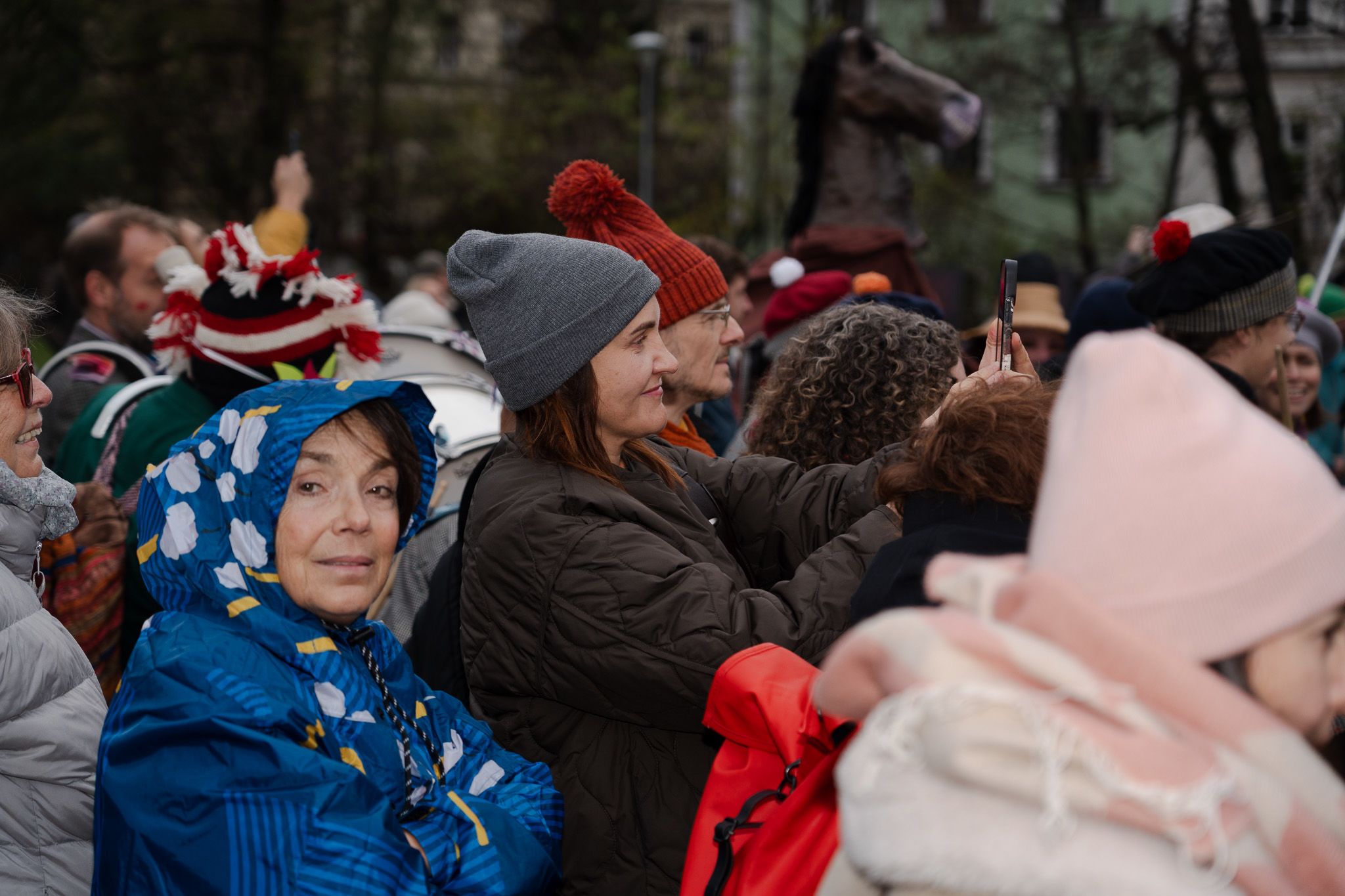
The carnival sees itself as part of the broader November 17 tradition, but it exists next to, not inside, the protests.
Most participants don’t view themselves as protesters at all—and are in fact not meant to join the official demonstrations. This creates a fascinating tension: a political act that insists on being something other than a protest. Writing on the Velvet Carnival in 2013, Professor Robert L. Grimes – author of several books on ritual and a professor at Charles University – wrote, “The Velvet Carnival is both a reaction against the morning demonstrations and a way of espousing local causes while playing with them and teasing spectators. [..] The event is designed to transform anger into celebration and polemics into creativity.”
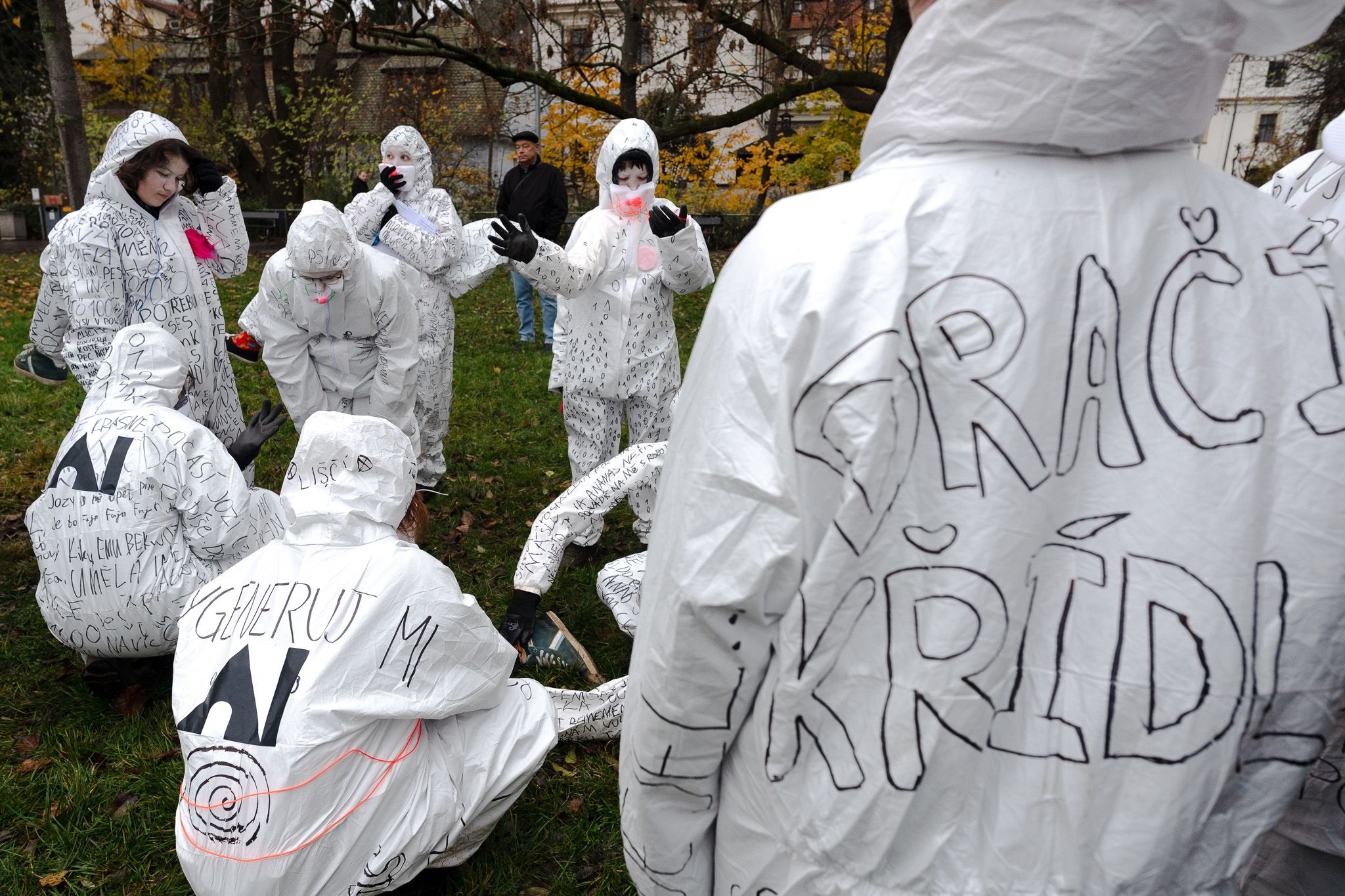
The student group "Klaun_AI_áda" prepares for their presentation. The group's theme was "apocalyptic circus" – their interpretation of the world in the age of AI.
The student group "Klaun_AI_áda" prepares for their presentation. The group's theme was "apocalyptic circus" – their interpretation of the world in the age of AI.
At 3pm on the 17th, the groups gathered at Kampa Park to present themselves, dancing in a wide circle made up of the other marchers and a growing audience. There were the mothers advocating for children’s rights in hospitals, a collective speaking about the rising cost of housing, a satirical “Don Quixote” group concerned with AI and digital overcrowding. Environmental performers. Animal-rights advocates. And of course, the Knights of Blaník.
Each group presented its issue of choice indirectly, using sarcasm and irony to call the audience to action. The group “Endless Summer Spritz”, donned in crocodile masks and colorful shirts, danced to an upbeat tune as an enthusiastic announcer celebrated the “new beachside property” and “endless summer weather” being given to the world through global warming. Later, a gigantic chicken leg happily pranced through the grass with a cow-shaped milk carton to represent the cause of the Animal Defenders of Prague.
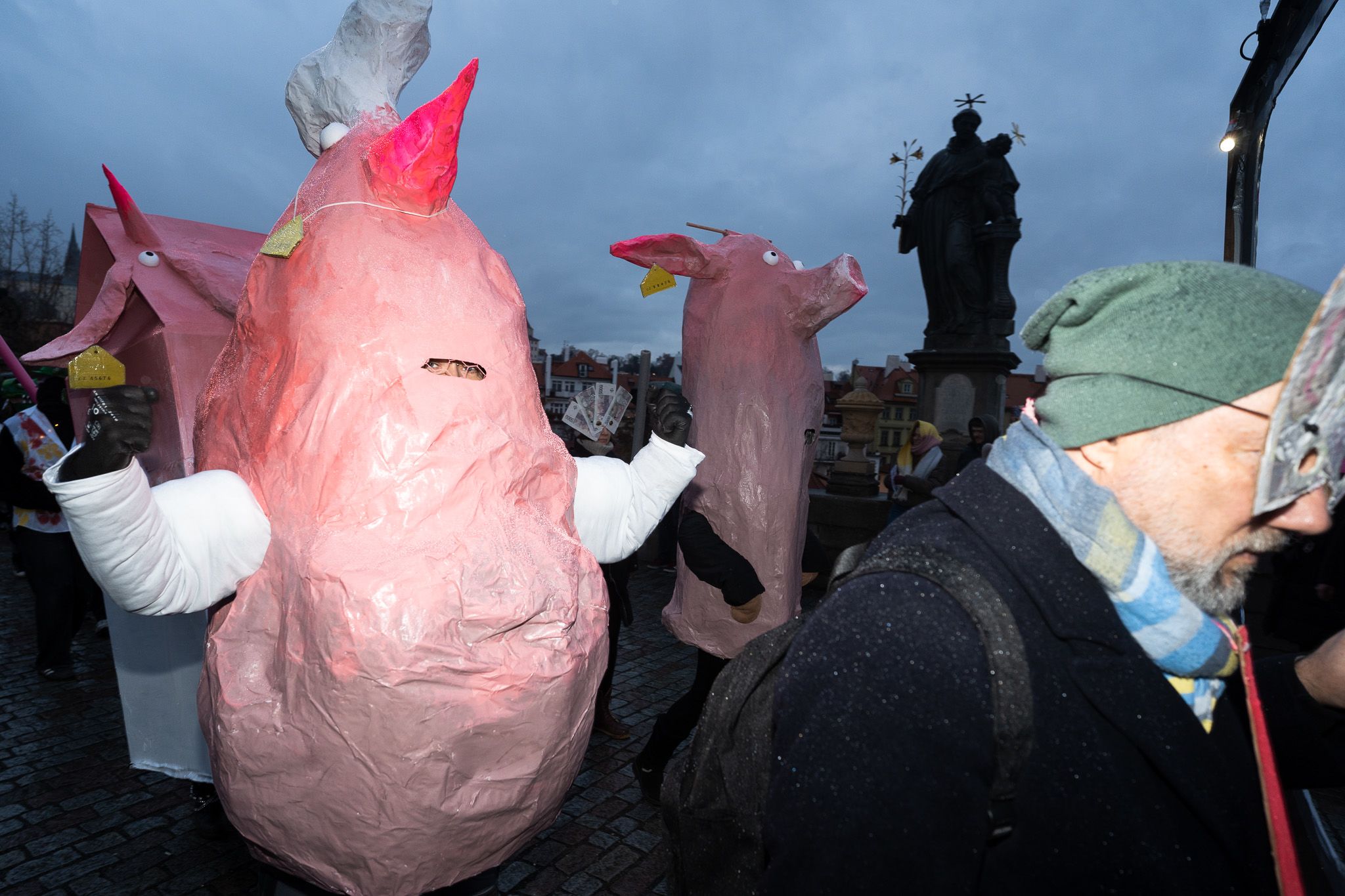
The Animal Defenders of Prague marching down Charles Bridge.
The Animal Defenders of Prague marching down Charles Bridge.
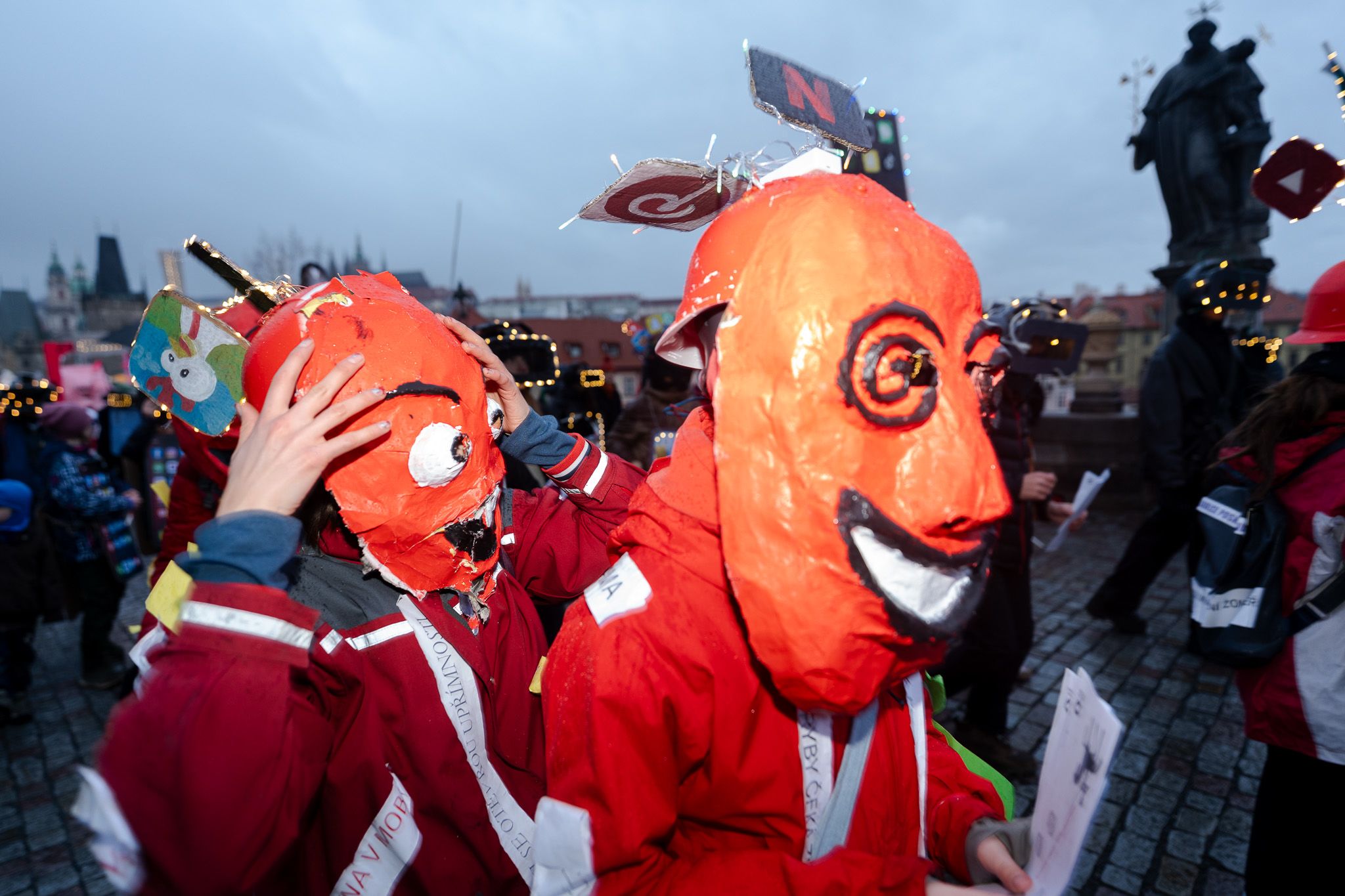
With opening introductions done, the parade began its slow movement towards the Charles Bridge. The music grew louder, enormous puppets lumbered over the crowds, and masked children followed eagerly alongside. Tourists filmed the event without quite knowing what they were seeing. But for those inside the parade, this was an important ritual of democratic expression—one where imagination was a tool of freedom.

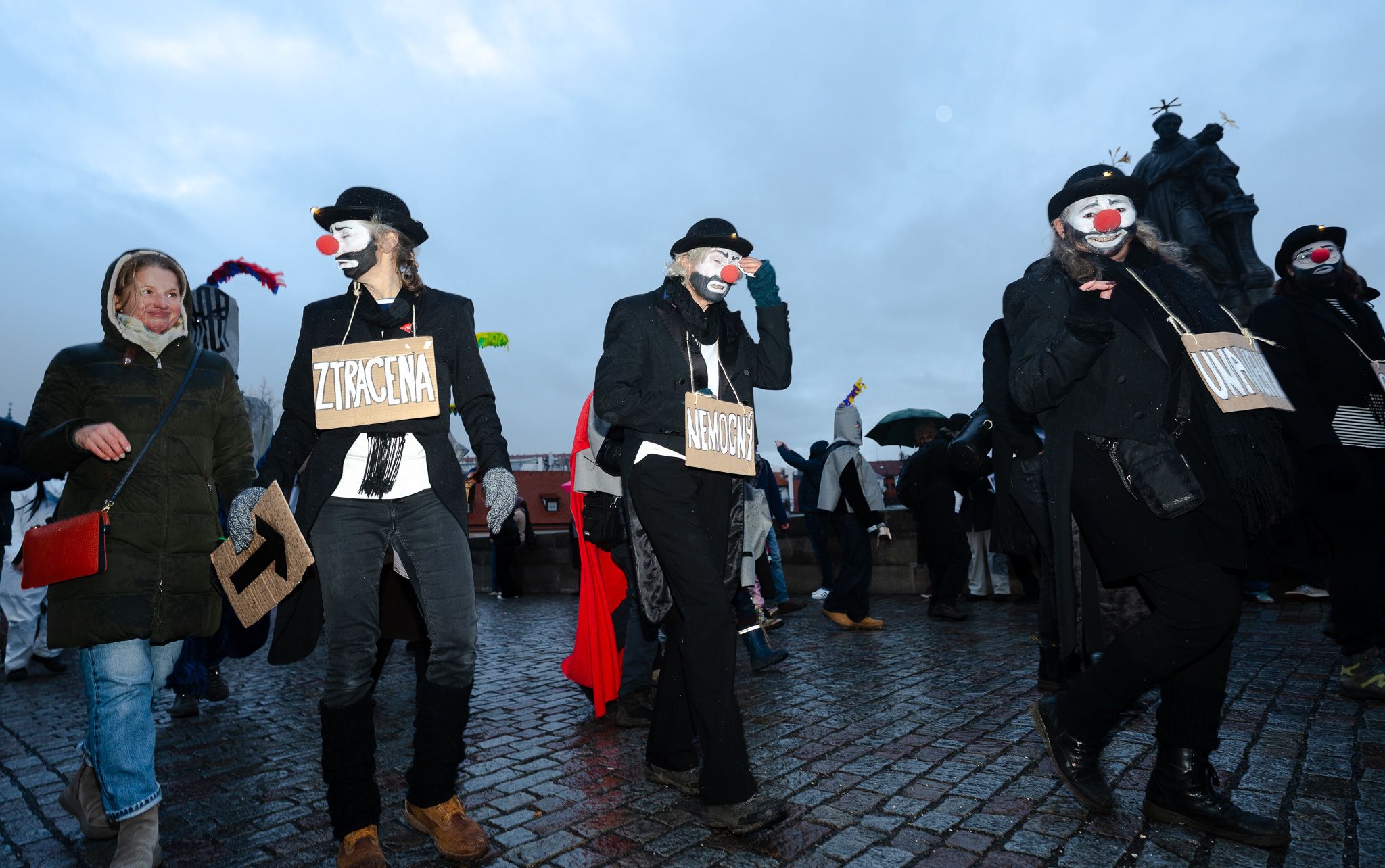
Clowns from Utrecht's Saint Maarten's Day Parade were part of the international additions to the Velvet Carnival.
Clowns from Utrecht's Saint Maarten's Day Parade were part of the international additions to the Velvet Carnival.

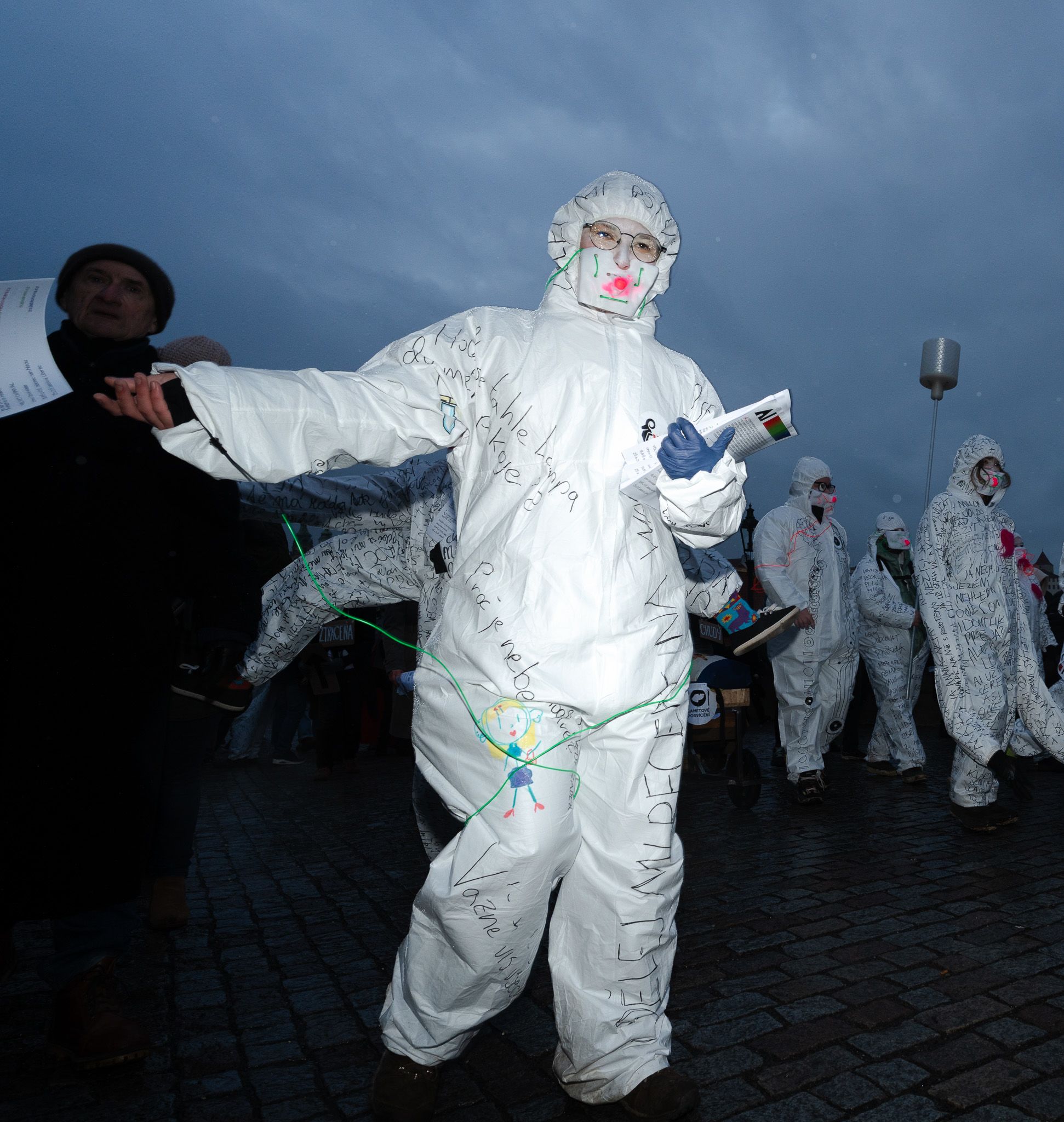
A marcher from Klaun_AI_áda throws a pamphlet on Charles Bridge.
A marcher from Klaun_AI_áda throws a pamphlet on Charles Bridge.

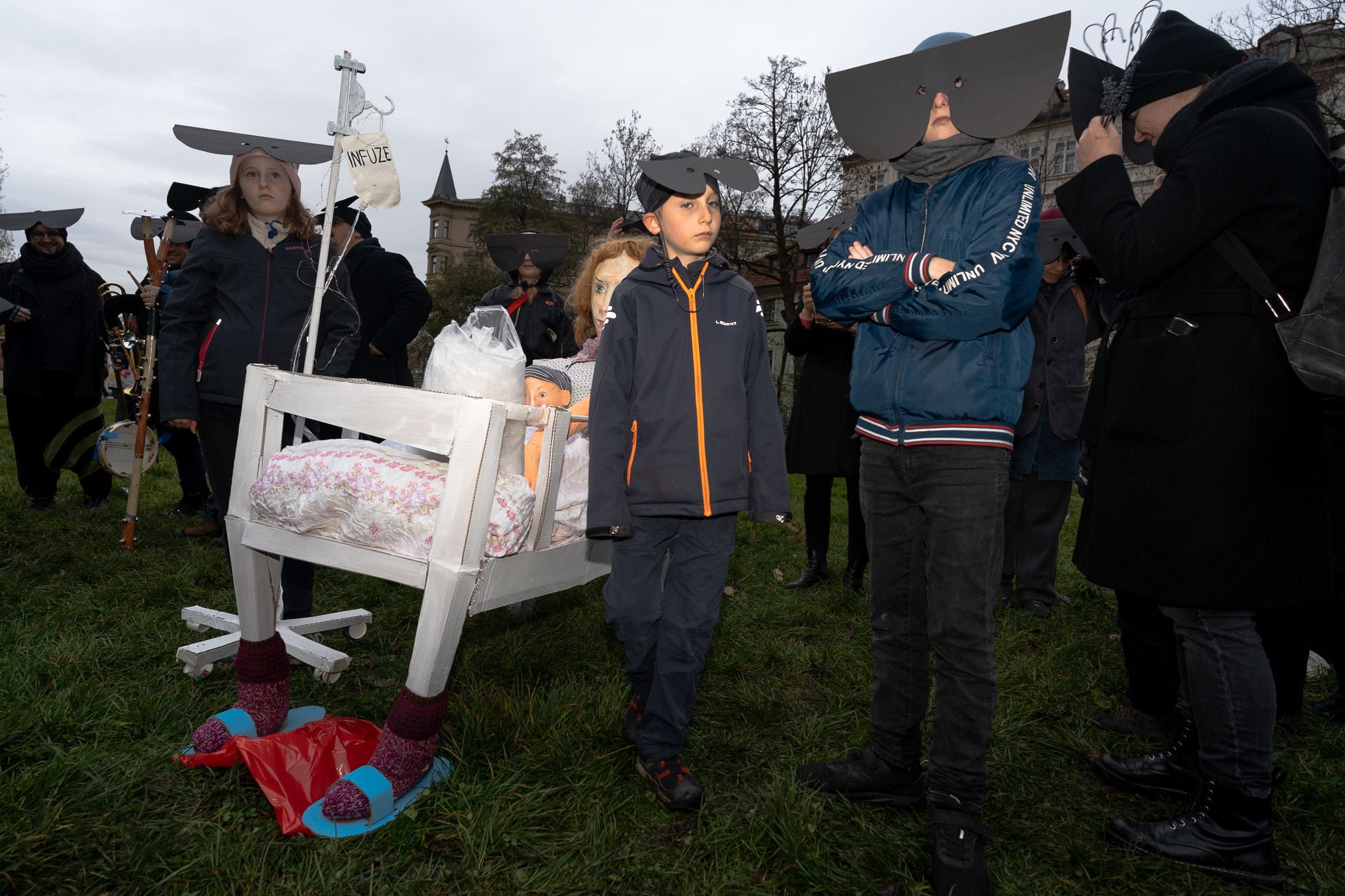
Children pose in front of the "Do Not Enter – Love" group, advocating for better access for parents in hospitals.
Children pose in front of the "Do Not Enter – Love" group, advocating for better access for parents in hospitals.

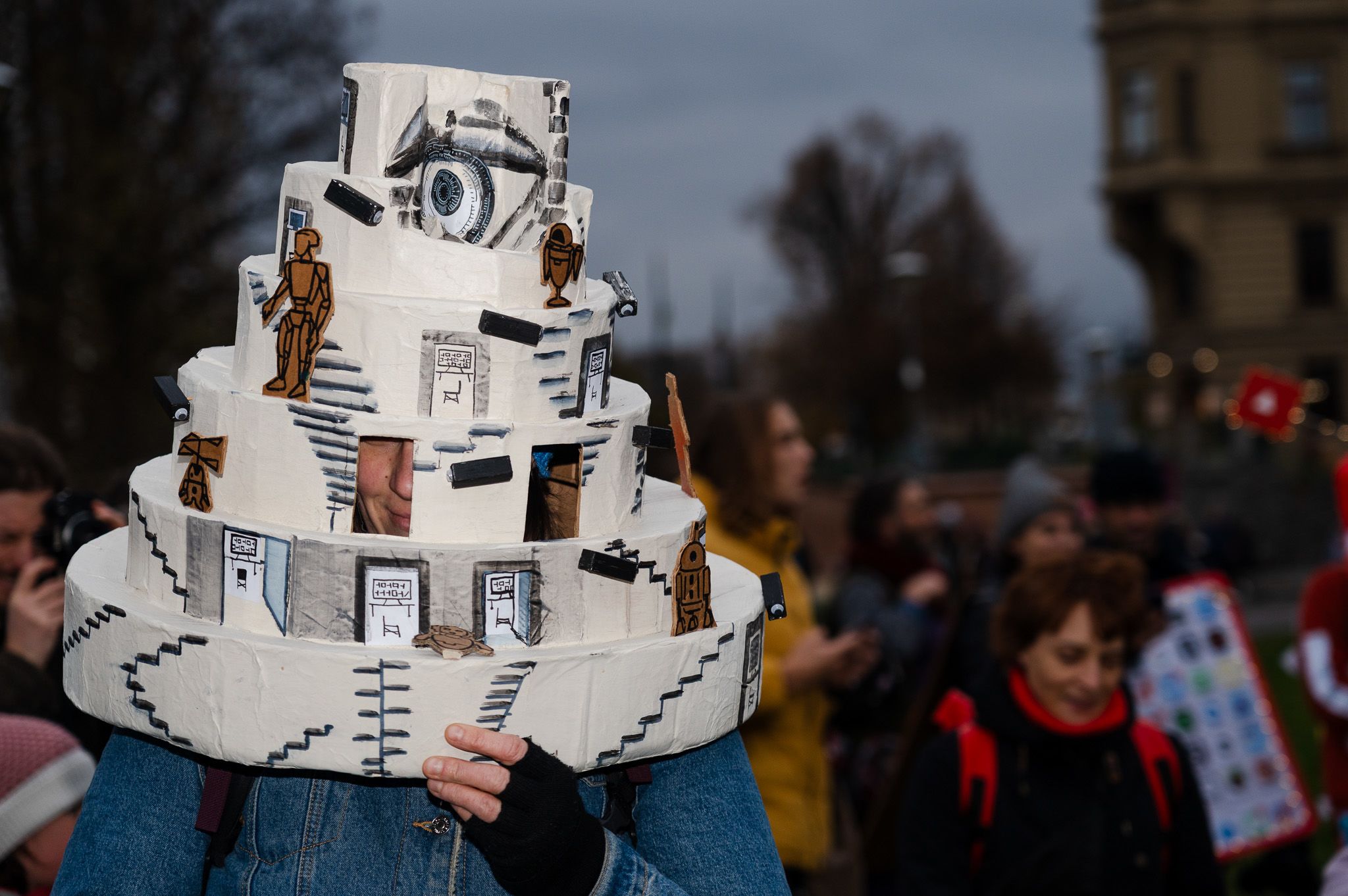
The theme of the opening procession was eternity and the triviality of human disputes, shown here and accompanied by a massive tardigrade.
The theme of the opening procession was eternity and the triviality of human disputes, shown here and accompanied by a massive tardigrade.

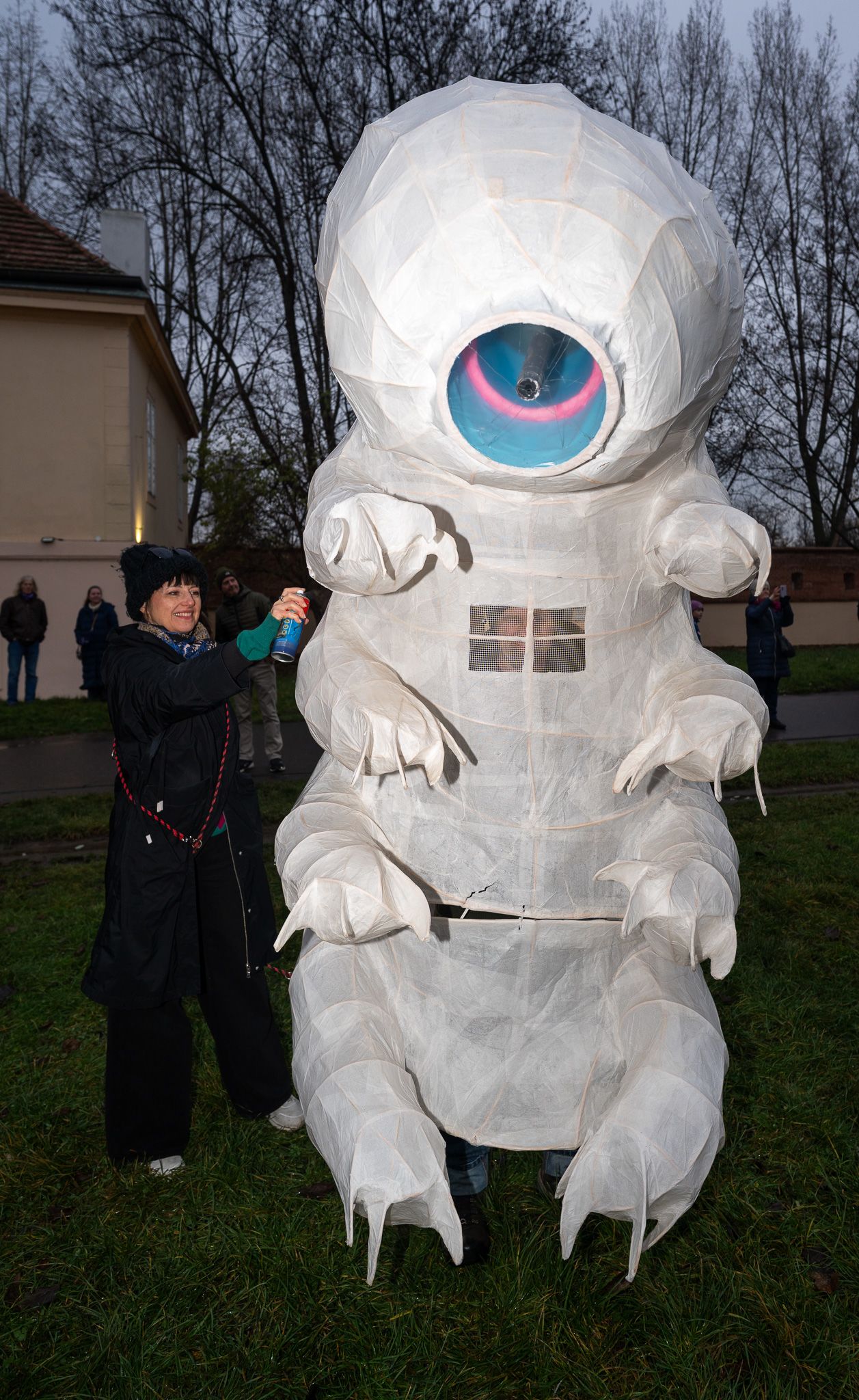
A giant tardigrade puppet being prepared for the march, symbolizing both humanity's endurance and the pettiness of human disputes.
A giant tardigrade puppet being prepared for the march, symbolizing both humanity's endurance and the pettiness of human disputes.
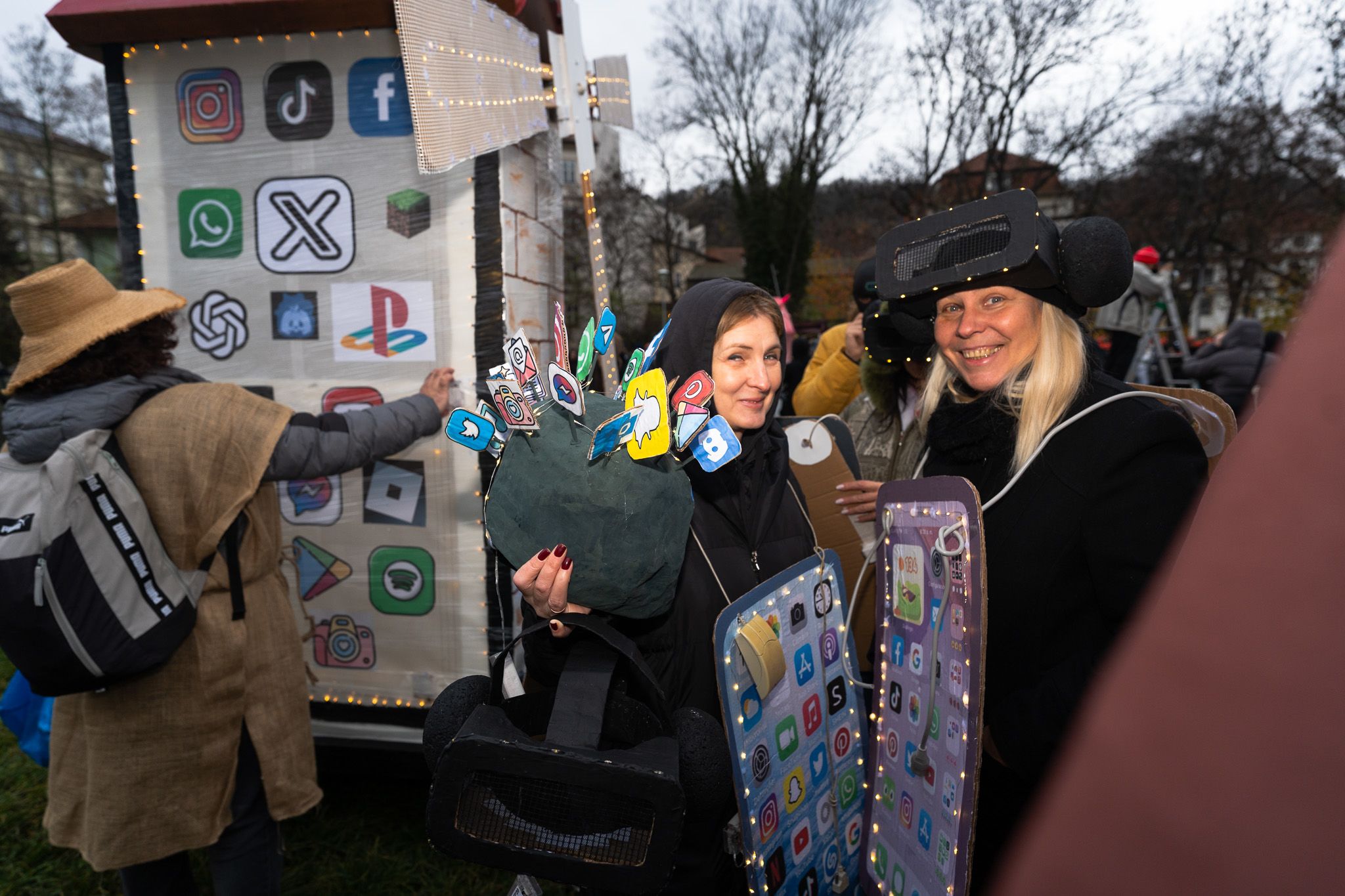
Women dressed as smartphones prepare for their introduction at Kampa Park.
Women dressed as smartphones prepare for their introduction at Kampa Park.

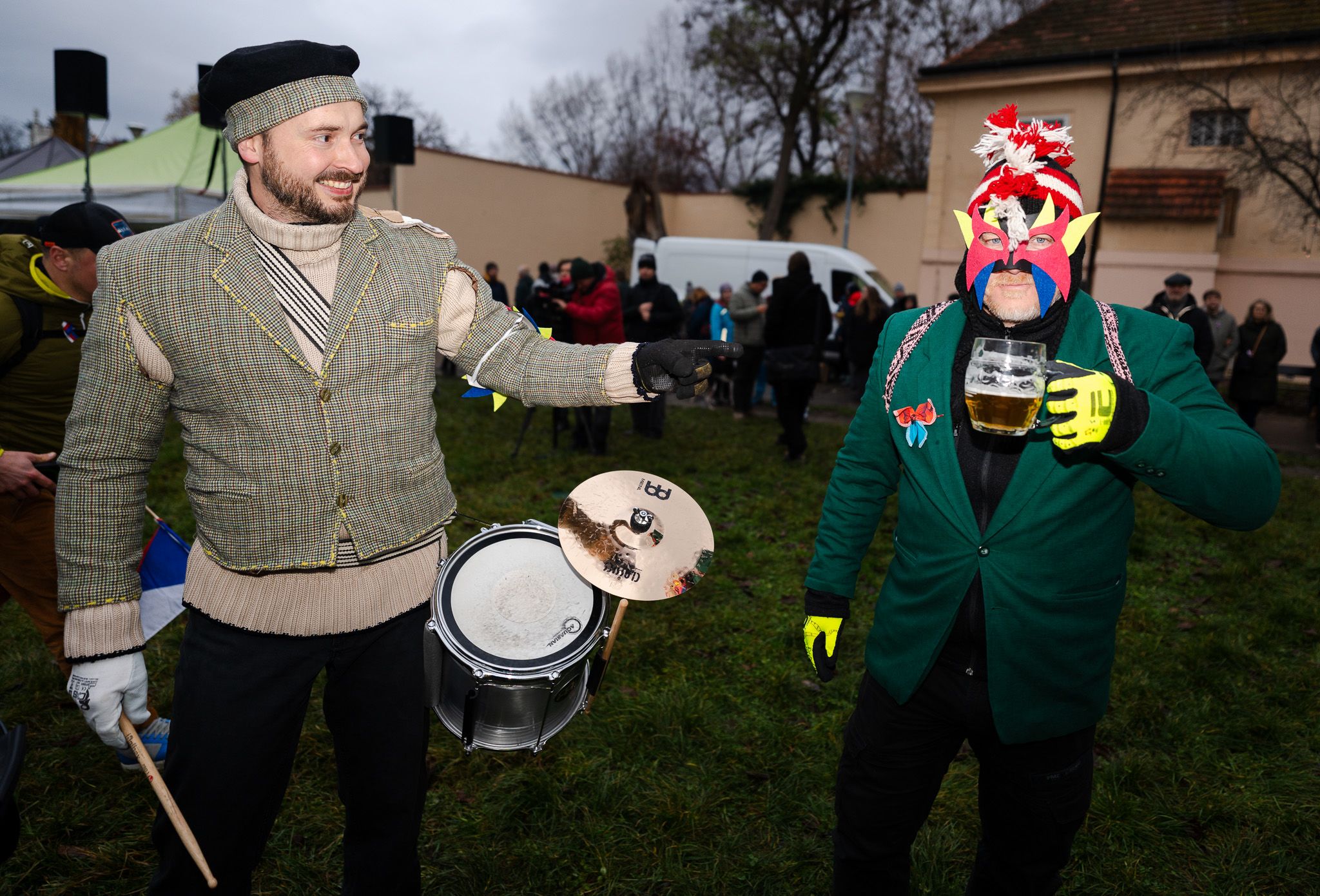
There was a general sense of camaraderie and shared joy between marchers.
There was a general sense of camaraderie and shared joy between marchers.
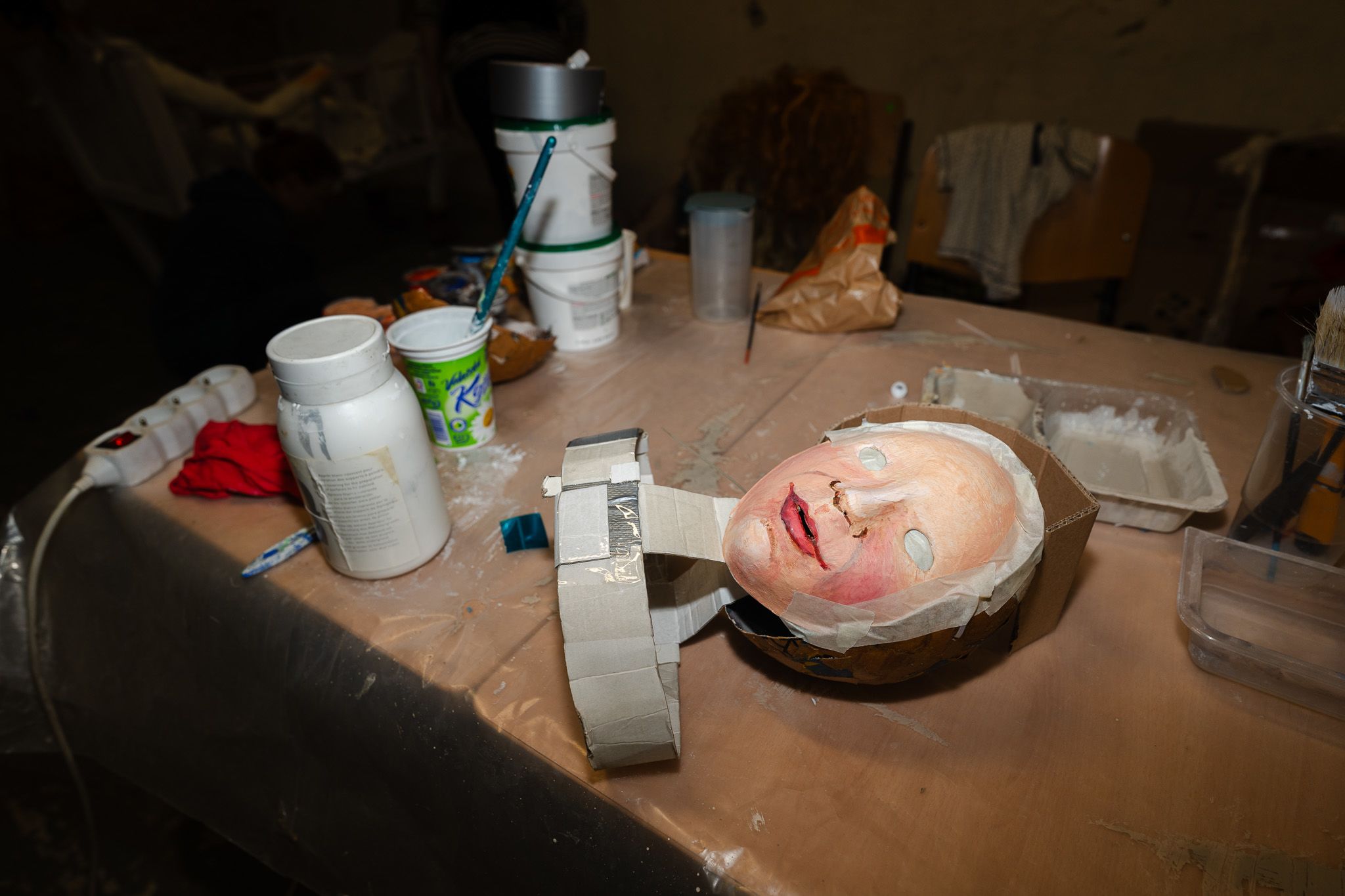
A mask from the "Do Not Enter – Love" group. The group's art focused on motifs of dolls and cribs.
A mask from the "Do Not Enter – Love" group. The group's art focused on motifs of dolls and cribs.
Contributions:
Kieran Hadley: Editor-in-Chief, Author, Photographer
Felipe Torres: Interviewer
Ross Billison: Videographer and Video Editor
Treasure Oguike: Videographer
Salma El Ashmawy: Designer
Marilena Tsireki: Co-author
 Built with Shorthand